
- Published in DISTINCTIVE CHARACTER OF A TRADEMARK, EUROPEAN UNION TRADEMARK
The importance of distinctive character in EU trademarks
Monday, 30 April 2018
Why is it important that European Union trademark has a distinctive character? Because if it is composed of descriptive terms even for a part of the Union, it is rejected in the whole European Union…
- Published in CASE LAW AND TRADEMARK, EUROPEAN UNION TRADEMARK
Descriptive trademarks with geographical names
Saturday, 28 April 2018
It is not always possible to register trademarks composed of geographical names. There are indeed some rules which have to be followed. In this article we speak about some rules affirmed in a judgment which can better clarify the issue.
- Published in EUROPEAN UNION TRADEMARK
Trademark with a reputation in the E.U.
Tuesday, 24 April 2018

In this article we analyze the notion of trademark with reputation in relation to an European Union trademark.
- Published in CASE LAW AND TRADEMARK, EUROPEAN UNION TRADEMARK
Genuine use of EU trademark: the case Levi Strauss
Tuesday, 24 April 2018
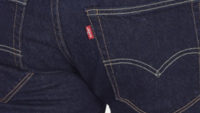
Article 18, 1) of the EU trademark Regulation n. 2017/1001 provides that:
“If, within a period of five years following registration, the proprietor has not put the EU trade mark to genuine use in the Union in connection with the goods or services in respect of which it is registered, or if such use has been suspended during an uninterrupted period of five years, the EU trade mark shall be subject to the sanctions provided for in this Regulation, unless there are proper reasons for non-use”.
- Published in CASE LAW AND TRADEMARK, THE TRADEMARK
Complex trademark and composite trademark: what is the difference?
Tuesday, 24 April 2018
Quite recently the Italian Corte di Cassazione informed us on the difference between the complex trademark and the composite trademark (judgements n. 1275 and 1276, both of January 25, 2016) and it precisely outlined the difference between the two categories of brands, which lies in the distinctiveness of the elements of which they are composed.
- Published in CASE LAW AND TRADEMARK, EUROPEAN UNION TRADEMARK
Exhaustion of the right of a trademark and its limitations
Tuesday, 17 April 2018

The owner of a trademark cannot prevent free circulation of its products after they have been placed on the market: this principle, called exhaustion of the right of a trademark, has some limita-tions. Let’s see them together.
- Published in CASE LAW AND TRADEMARK
Patronymic trademark: the distinctiveness in cases of homonymy
Monday, 16 April 2018

In cases of homonymy of patronymic trademarks (namely trademarks consisting of name and surname or only surname) the other elements constituting the trademark can become decisive. We mention some judgments about it.
- Published in CASE LAW AND TRADEMARK
Figurative trademark and complex trademark
Monday, 16 April 2018

In this decision UIBM compared a figurative and a complex trademark, having in common a similar image. Find out the result.
- Published in CASE LAW AND TRADEMARK
Word mark consisting of foreign words: the case Slimmer
Monday, 16 April 2018

As a case of word mark consisting of foreign words, we report the case from which the decision of the Italian Corte di Cassazione originates which can be summarized as follows: the owner of a registered trademark named “SLIMMER”, used to distinguish a food supplement with slimming function, sued a distributor which begun selling a supplement food market with the word “SLIMMEX.
Weak trademark: cases of counterfeiting and similar trademarks
Monday, 16 April 2018
It is said weak trademark the trademark with a little distinctive capacity, while it is strong trademark the remarkably distinctive trademark, because it is made up of fanciful words (or other signs) or it is made up of words that, despite being in common use, are devoid of conceptual link with the products and/or service distinguished by the trademark.

English
Italiano 


