
 English
  Italiano
 Is it possible to consider invalid a figurative trademark because descriptive and devoid of distinctiveness?
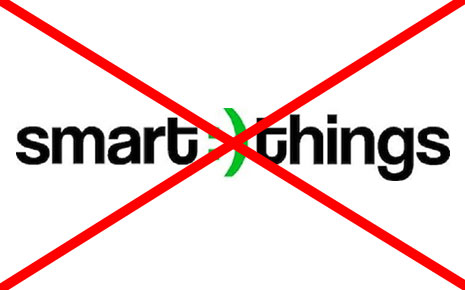
Yes, of course, even if it is often thought that only a word mark can be considered descriptive and that it is sufficient to adopt minimal graphic measures to endow any trademark with distinctive capacity.
Really this is not the case because also figurative trademarks can be considered descriptive and lacking in distinctive capacity.
An example of figurative trademark recently deemed invalid as descriptive of the goods and services claimed is the EU trademark  , filed in Nice classes 9 ( for “scientific, nautical, surveying, photographic, cinematographic, optical apparatus and instruments …telephone holders and mobile telephone holders, smartphones, …tablets …other articles, in particular in the filed of photography, video, audio, computers and telecommunications”), 20 ( for “furniture, mirrors, picture frames; goods (not included in other classes) of wood, cork, reed, cane, wicker…”) and 35 (for “advertising; business managements; business administration…”).
The General Court (T-48/19, 15 October 2020) confirmed the decision of the Board of Appeal of EUIPO which by decision of 20 November 2018 declared the European Union trademark n. 010924836 invalid.
The Board of Appeal pointed out that the word elements “smart things” were descriptive of a characteristic of the goods and services covered by the mark, namely that they were
“fashionable, chic” and that the figurative element : ) , it only reinforced the message that the goods had positive features. EUIPO stated, besides, that the words “smart things” were descriptive of the goods and services covered by the mark on the ground that they referred to the intelligent technology or technological sophistication.
EUIPO deemed that the sign as a whole
“beyond its obvious laudatory meaning promoting the goods and services in question, enabled the relevant public to memorise the sign easily and instantly as a distinctive trademark for the goods and services claimed” and pointed out that “the laudatory connotation of the word element smart in conjunction with the laudatory and exclusively positive connotation of the emoticon rendered the sign devoid of distinctive character”.
The Court confirmed the decision of the Board of Appeal of EUIPO and states, as regard as the figurative element, that
“if the word element of a mark is descriptive, the mark is, as a whole, descriptive if the figurative elements of that mark do not divert the relevant public’s attention from the descriptive message conveyed by the word elements”.
(Judgments of 6 April 2017, Metabolic Balance Holding v EUIPO (Metabolic Balance), T 594/15, not published, EU:T:2017:261, paragraph 33, and of 15 March 2018, SSP Europe v EUIPO (SECURE DATA SPACE), T 205/17, not published, EU:T:2018:150, paragraph 31).

Did you find this article interesting? Share it!