
 English
  Italiano
 The proprietor of a mark who has put its products on the market cannot prohibit the free movement of goods in the States of European Union or in the European Economic Area: this would be the so-called “exhaustion of the rights”.
In this post we talk about:
Exhaustion of the industrial property right in Italian law
Article 5, paragraph 1) of the Italian Industrial Property Code provides that:
“The rights conferred by this Code to the owner of an industrial property right are exhausted once the products protected by an industrial property right have been put on the market by the proprietor or with his consent in the State or in the territory of a Member State of the European Community or the European Economic Area”.
We can find a limitation of this principle in the second paragraph of article 5, which provides:
“This limitation of the rights of the holder, however, does not apply where there exist legitimate reasons for the proprietor to oppose further commercialization of the goods, especially where the condition of these is changed or impaired after they have been put on the market”.
Limitation to the principle of the exhaustion of the right
An interesting and recent interpretation of the limits of exhaustion has been developed by the Court of Rome (order dated 29 October 2012 and 10 January 2013), which, according to Community case-law, stated that Article 7 of the Directive 2008/95 EC
“must be interpreted that the trademark proprietor may oppose the further commercialization of the goods when the parallel importer has made a new packaging of the product, which is likely to damage the reputation of the trademark and its owner, so the packaging or the label must not be defective, of poor quality, or untidy
(Court of Justice, in Case C-384/04 of 26.04.2007)
and that
“a repackaged product could be presented inappropriately and, therefore, liable to damage the reputation of the trademark, where the packaging or the label, whilst not defective, of poor quality or untidy, is likely to affect the value of the trademark, damaging the image of reliability and quality linked to such a product, as well as the confidence it is capable of inspiring in the public concerned (Court of Justice in case C-337/95 of 4.11.1997).
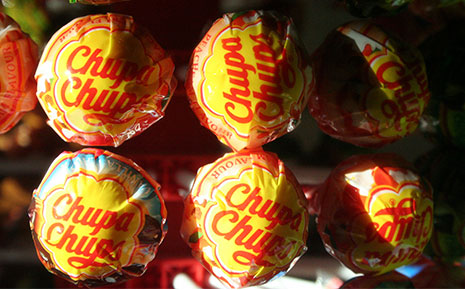
In the case before the Court of Rome the applicants, owners of trademarks “Chupa Chups”, “Big Babol” and “Mentos”, had acted for infringement against an Italian company, which imported their products and inadequately relabeled such products. In the opinion of the applicants, the result was a damage of their professional image and a debasement of their trademarks. The Court of Rome upheld the applicants’ claims pointing out that
“in this case, the labels applied by the defendant company on the imported products have characteristics detrimental to the reputation of the marks in question, as in materials, colors, sizes, and finishes are in contrast with the original packaging of imported products, particularly wellfinished in the type of paper used, graphics and colors”.
Exhaustion of the industrial property right in the Directive EU 2015/2436
At EU level, article 15 of Directive EU 2015/2436 provides that:
“A trademark shall not entitle the proprietor to prohibit its use in relation to goods which have been put on the market in the Union under that trademark by the proprietor or with the proprietor’s consent”.
Paragraph 1 shall not apply where there exist legitimate reasons for the proprietor to oppose further commercialization of the goods, especially where the condition of the goods is changes or impaired after they have been put on the market.

Did you find this article interesting? Share it!